

For decades, businesses could increasingly treat the world as one connected marketplace. A company might design a product in the United States, source components from China, manufacture in Vietnam, obtain financing in Europe and sell to customers across several continents.
That model has not disappeared. However, governments and businesses are now paying much closer attention to where goods are produced, who controls critical technologies, which countries are trusted partners and how political tensions could interrupt financial and commercial relationships.
This shift is known as geoeconomic fragmentation.
It is changing international trade, foreign investment, supply chains, financial markets and the movement of capital. Companies are reconsidering where they manufacture, investors are reassessing country risks, and governments are using trade and investment policies to protect strategic industries. Large public investment pools, including sovereign wealth funds, may also adjust their global allocations as geopolitical and strategic priorities evolve.
For businesses and investors, understanding geoeconomic fragmentation is becoming an important part of understanding the global economy.
What Is Geoeconomic Fragmentation?
Geoeconomic fragmentation refers to the restructuring of international economic relationships along geopolitical or strategic lines.
Instead of making decisions primarily on cost, efficiency and market access, governments and businesses increasingly consider political alignment, national security, technology restrictions and supply-chain reliability.
This can influence:
- International trade and import-export relationships
- Foreign direct investment (FDI)
- Cross-border banking and financial services
- Technology transfers and semiconductor supply chains
- Energy and critical mineral markets
- Currency and payment systems
- International lending and capital allocation
Geoeconomic fragmentation does not necessarily mean that countries stop trading with one another. It means economic relationships can become more selective, concentrated or divided.
For example, a manufacturer may choose a supplier in a politically aligned country even when another supplier offers a lower price. The decision reflects a preference for supply-chain security rather than simply the lowest production cost.
Geoeconomic Fragmentation vs Globalisation
| Globalisation | Geoeconomic fragmentation |
|---|---|
| Emphasises international integration | Emphasises strategic economic relationships |
| Often prioritises cost efficiency | Gives greater importance to security and reliability |
| Encourages broad supplier networks | Can favour selected countries and partners |
| Promotes cross-border capital flows | Can introduce investment restrictions and screening |
| Relies on interconnected production | May encourage regional or politically aligned supply chains |
These are broad tendencies rather than completely separate economic systems. Globalisation continues, but its structure is changing.
Why Is the Global Economy Becoming More Fragmented?
Several developments are encouraging governments and companies to reconsider international economic dependence.
1. Strategic Competition Between Major Economies
Competition between major economic powers has expanded beyond traditional trade disputes.
Semiconductors, artificial intelligence, telecommunications, advanced manufacturing, energy technologies and critical minerals are increasingly viewed as strategic assets.
Governments may introduce export controls, investment screening, tariffs or restrictions on access to sensitive technologies.
These measures can affect companies operating across borders, even when those companies are not directly involved in political disputes.
For example, a technology company may face additional compliance requirements when purchasing advanced chips or transferring certain technologies between jurisdictions.
2. Supply-Chain Security
The pandemic demonstrated how disruptions in one region can affect production around the world.
Shortages of semiconductors, medical supplies, shipping capacity and industrial components exposed the risks of excessive dependence on limited suppliers.
Geopolitical tensions have added another layer of concern.
Businesses increasingly examine:
- Whether essential components have alternative suppliers
- Whether manufacturing depends on one country
- Whether transport routes are exposed to disruption
- Whether suppliers can comply with changing regulations
- How quickly production could move to another location
This has encouraged diversification and regional supply-chain strategies.
3. National Security and Technology Controls
Governments increasingly consider certain technologies too important to leave entirely dependent on foreign suppliers.
Advanced semiconductors, artificial intelligence infrastructure, cybersecurity systems, telecommunications equipment and defence-related technologies are examples.
Restrictions can influence international investment and trade by limiting who can purchase, manufacture or transfer particular technologies.
The challenge is balancing legitimate security concerns with the benefits of international cooperation.
4. Industrial Policy and Economic Self-Reliance
Industrial policy has become more prominent as governments seek to strengthen domestic production capabilities.
Incentives, subsidies, public procurement and local-content requirements can encourage investment in selected industries.
These policies may create opportunities for domestic manufacturers and attract international businesses. However, they can also increase competition between governments, create trade disputes and influence where capital is invested.
5. Energy Security and Critical Minerals
The global transition towards cleaner energy requires reliable access to minerals and industrial materials.
Lithium, copper, cobalt, nickel, graphite and rare earth elements are important in different parts of the energy and technology supply chains.
Countries that depend heavily on a small number of suppliers may become concerned about disruptions or export restrictions.
As a result, governments and companies are investing in alternative sources, processing facilities, recycling and strategic partnerships.
How Geoeconomic Fragmentation Changes Global Trade
International trade is one of the most visible areas affected by geopolitical and economic changes.
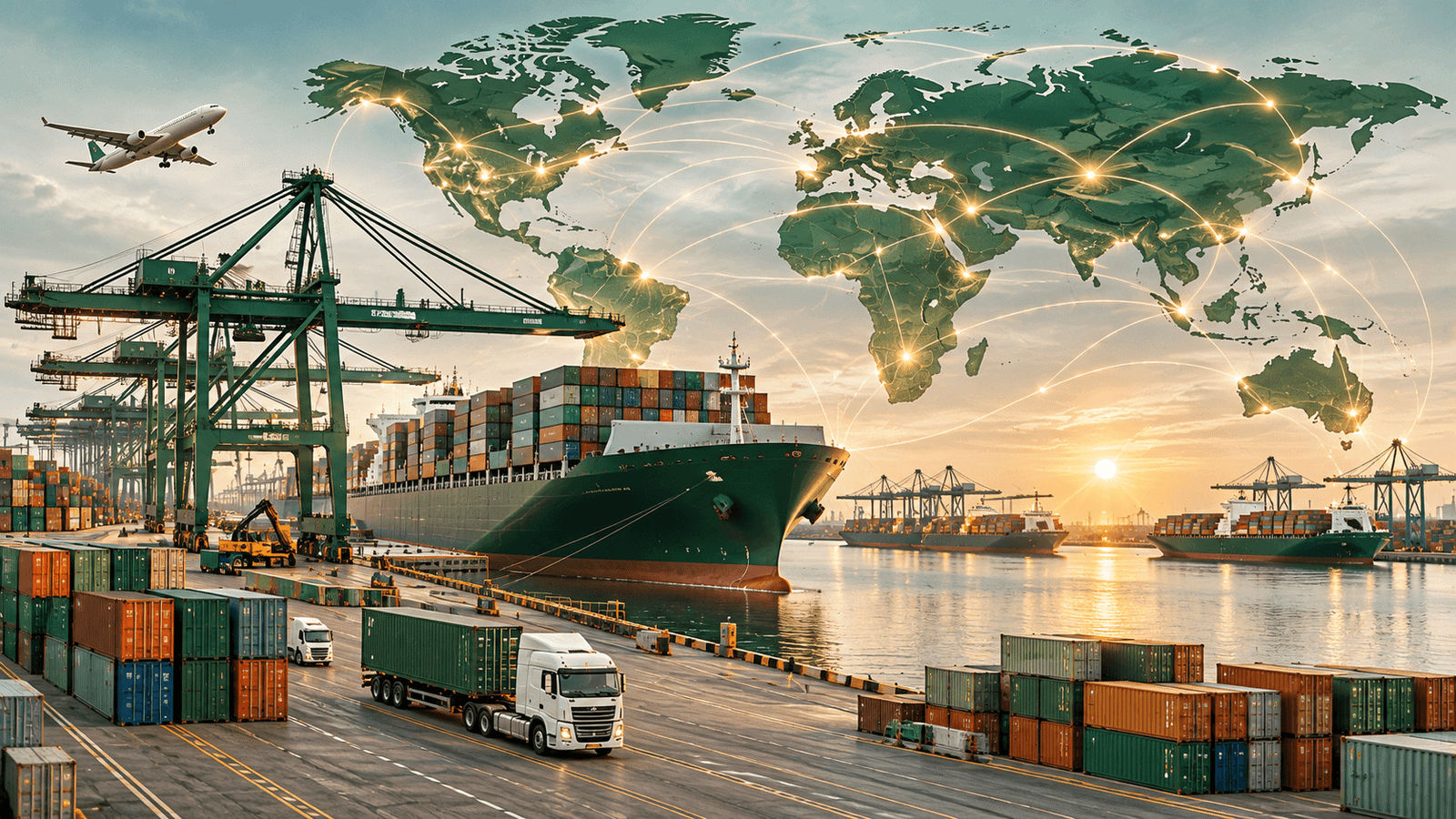
Businesses are reconsidering suppliers, production locations and export markets. Governments are also reviewing trade agreements and introducing new measures affecting strategic industries.
Friendshoring
Friendshoring means moving or developing supply-chain relationships in countries considered reliable political or economic partners.
A company may choose a supplier in a friendly jurisdiction to reduce the risk of sudden restrictions or disruptions.
However, friendshoring does not automatically guarantee lower costs or stronger resilience. If too many companies depend on the same preferred countries, new concentrations can develop.
Nearshoring
Nearshoring involves moving production or sourcing closer to the company’s main market.
For example, a company selling primarily in North America may consider manufacturing in Mexico rather than relying entirely on distant suppliers.
Potential advantages include shorter delivery times, easier coordination and reduced exposure to certain transport disruptions.
However, nearshoring may involve higher labour costs, infrastructure limitations or shortages of specialised suppliers.
Reshoring
Reshoring means bringing manufacturing or business operations back to the company’s home country.
Governments may support reshoring in industries considered important for national security or economic resilience.
Domestic production can reduce certain external dependencies, but it may require substantial investment and could increase production costs.
Regionalisation
Regionalisation involves organising trade and production around regional economic networks.
Companies may develop supply chains across neighbouring countries to improve logistics, market access and operational flexibility.
Regional trade agreements and infrastructure investment can support this approach.
These strategies can overlap. A business may use nearshoring for some products, friendshoring for sensitive components and global sourcing for everything else.
How Geoeconomic Fragmentation Reshapes Global Capital Flows
Trade is only one part of the story. Capital flows are also changing.

Investors, banks, multinational corporations and governments are reconsidering where money should be invested and which cross-border financial relationships carry acceptable risks.
Foreign Direct Investment
Foreign direct investment occurs when an investor establishes or acquires a lasting business interest in another country.
Geopolitical considerations can influence the location of factories, technology facilities, data centres, energy projects and infrastructure.
The UN Trade and Development (UNCTAD) World Investment Report 2026 reported that global FDI rose 6% to approximately $1.6 trillion in 2025. However, the recovery was uneven: developed economies recorded 11% growth, while developing economies recorded 2% growth.
The report also highlighted the growing concentration of investment in strategic sectors, including artificial intelligence infrastructure, semiconductors, critical minerals and energy-transition technologies.
This suggests that the location and strategic importance of investment matter alongside the total amount of capital moving internationally.
Portfolio Investment
Portfolio investors purchase financial assets such as shares, bonds and investment funds without necessarily seeking control over the underlying businesses.
Geopolitical developments can influence portfolio decisions through:
- Changes in expected corporate earnings
- Currency volatility
- Interest-rate expectations
- Sovereign credit risk
- Sanctions and investment restrictions
- Market liquidity and investor confidence
When geopolitical risks rise, investors may reassess their exposure to particular countries, industries or currencies.
However, market reactions are not always predictable. Some investors may reduce exposure, while others may see attractive valuations or new investment opportunities.
Cross-Border Banking
Banks facilitate international trade and investment through trade finance, foreign exchange, loans, payments and correspondent banking relationships.
Fragmentation can increase compliance requirements and operational complexity.
Banks may need to review the countries, counterparties, currencies and industries they serve. Restrictions or changes in correspondent banking relationships can also affect businesses that depend on international payments.
For multinational corporations, this makes banking diversification and liquidity planning increasingly important.
Sovereign Wealth Funds and Government Investment
Sovereign wealth funds manage government-owned investment portfolios, often with long-term objectives.
Geopolitical considerations can influence their investments in infrastructure, technology, energy, natural resources and strategic industries.
Some governments may prioritise domestic economic resilience, while others continue to diversify internationally.
These investment decisions can affect global capital allocation and the development of strategic industries.
The Role of the US, China, Europe and Other Major Economies
Geoeconomic fragmentation does not affect every country in the same way. Major economies have different industrial strengths, policy priorities and international relationships.
United States
The United States has significant influence in global finance, advanced technology, capital markets and international trade.
Policies involving semiconductors, strategic manufacturing, technology exports and investment screening can influence international business decisions.
Companies operating in multiple jurisdictions must consider how US regulations and trade measures affect their suppliers, customers and technology access.
China
China remains an important manufacturing centre and a major participant in global trade.
Its role in electronics, industrial components, critical mineral processing and other manufacturing activities makes changes in its international economic relationships significant.
Businesses that depend on Chinese suppliers may consider alternative sourcing arrangements. At the same time, China’s domestic market and industrial capabilities remain important to many international companies.
European Union
The European Union is working to strengthen economic resilience, energy security, technology capabilities and strategic industrial capacity.
Its trade, competition, sustainability and investment policies can influence companies operating throughout the European market.
European businesses may need to balance access to global suppliers with regulatory requirements and strategic supply-chain objectives.
India
India has opportunities to benefit from companies diversifying manufacturing and investment locations.
Its large domestic market, expanding digital infrastructure, skilled workforce and industrial development ambitions can make it attractive for selected investments.
UNCTAD’s World Investment Report 2026 reported that India’s FDI inflows increased 44% to approximately $39 billion in 2025.
However, attracting sustained investment requires more than geopolitical positioning. Infrastructure, logistics, regulatory predictability, workforce skills, supplier networks and access to export markets remain important.
India can benefit from supply-chain diversification while maintaining trade and investment relationships with a broad range of economies.
Southeast Asia and Other Emerging Markets
Countries such as Vietnam, Malaysia, Thailand and Indonesia may benefit from selected manufacturing and supply-chain investments.
Mexico can also benefit from its manufacturing connections and geographic proximity to the United States.
However, opportunities are not distributed equally. Countries need reliable infrastructure, skilled workers, competitive production costs and stable business environments to attract long-term investment.
What the Latest Global Reports Tell Us
Recent international research shows why fragmentation deserves attention.
The WTO’s World Trade Report 2026 examines how geopolitical tensions, economic policy differences and changes in global production are challenging the multilateral trading system.
The report presents modelled scenarios in which a world divided into geopolitical trade blocs could experience significant economic losses. One scenario estimates a 5.1% reduction in global GDP and an 18.6% reduction in global exports compared with its baseline.
These figures are scenario estimates, not predictions that those losses will necessarily occur.
UNCTAD’s Trade and Development Report 2026 describes a changing geography of trade and reports that global trade reached approximately $35 trillion in 2025 despite conflicts and rising trade restrictions.
Together, these reports highlight an important distinction: global trade can remain large and active even while its underlying relationships become more selective.
How Businesses Can Respond to Geoeconomic Fragmentation
Businesses cannot control international political developments, but they can improve their ability to respond.
1. Map Critical Supply-Chain Dependencies
Companies should identify essential suppliers, production locations, transport routes and technology providers.
A supply-chain map can help management understand where the business is exposed to a single supplier, country or logistics corridor.
2. Develop Alternative Suppliers
Depending on one supplier may reduce purchasing costs, but it can create significant operational risk.
Businesses should evaluate alternative suppliers and determine whether they can meet quality, capacity, compliance and delivery requirements.
Diversification should be based on realistic alternatives rather than simply increasing the number of suppliers.
3. Review Country and Counterparty Risk
Companies should monitor political stability, regulatory changes, sanctions, currency exposure and the financial condition of important counterparties.
Country risk analysis should be integrated into procurement, investment and financing decisions.
4. Strengthen Treasury and Liquidity Planning
International disruptions can affect payment timing, foreign-exchange costs, borrowing conditions and access to banking services.
Corporate treasury teams should evaluate liquidity buffers, banking concentration, currency exposures and contingency funding arrangements.
Read more in Corporate Treasury Management: How Global Businesses Manage Cash and Liquidity.
5. Evaluate Investment Locations Carefully
A country may offer attractive incentives or favourable political relationships, but businesses still need to examine infrastructure, labour availability, taxation, regulations and long-term demand.
Investment decisions should be based on the full economic picture rather than a single geopolitical advantage.
6. Improve Cybersecurity and Operational Resilience
Cross-border operations depend on digital infrastructure, cloud providers, payment networks and external technology partners.
Businesses should evaluate third-party risks, data security and recovery plans.
For a deeper explanation, read Cyber Resilience in Financial Institutions: Protecting the Global Financial System.
What Investors Should Watch
Investors may need to consider geopolitical and economic fragmentation when analysing companies, countries and financial markets.
Important areas include:
- Revenue concentration: Does a company depend heavily on one international market?
- Supplier concentration: Are critical components sourced from a limited number of countries?
- Regulatory exposure: Could new restrictions affect the company’s products or operations?
- Capital expenditure: Is the business investing in alternative production locations?
- Currency exposure: Could changes in trade relationships affect foreign-exchange earnings?
- Financing access: Could geopolitical restrictions affect borrowing or international capital markets?
- Valuation: Does the market price adequately reflect the company’s exposure to geopolitical risk?
Investors should avoid assuming that every company benefiting from supply-chain diversification will automatically become more profitable. New factories, suppliers and compliance systems can require substantial capital.
The impact depends on execution, competition, demand and the company’s ability to manage additional costs.
Opportunities Created by Geoeconomic Fragmentation
Although fragmentation creates risks, it can also generate investment and business opportunities.
Manufacturing Diversification
Countries attracting alternative manufacturing investment may benefit from new factories, employment, infrastructure and technology transfer.
Critical Minerals and Resource Processing
Demand for diversified sources of lithium, copper, nickel, rare earth elements and other materials can encourage investment in mining, refining, recycling and processing.
Logistics and Infrastructure
Changes in trade routes and production locations can increase demand for ports, warehouses, railways, industrial parks and regional distribution centres.
Financial Risk Management
Businesses may need more sophisticated foreign-exchange hedging, trade finance, insurance and supply-chain risk management services.
Digital Infrastructure and Cybersecurity
As companies reorganise international operations, demand may increase for secure cloud infrastructure, data protection, digital identity and resilient payment systems.
These opportunities are not guaranteed returns. They depend on long-term demand, regulatory conditions, project economics and the ability to execute successfully.
Risks of a More Fragmented Global Economy
The transition towards more selective economic relationships can create several wider problems.
Higher Costs
Duplicating factories, suppliers and infrastructure may increase production expenses.
Businesses may pass some of these costs to consumers, contributing to higher prices.
Reduced Efficiency
International production networks have developed over many years to benefit from specialised suppliers and economies of scale.
Fragmentation can weaken these advantages when companies are forced to select suppliers for strategic rather than purely economic reasons.
Unequal Development Opportunities
Countries with strong infrastructure, large markets and greater financial resources may attract more strategic investment.
Smaller and lower-income economies may struggle to compete for major projects, particularly when governments use large subsidies to attract companies.
Financial Market Volatility
Trade restrictions, sanctions and geopolitical disputes can influence investor confidence, exchange rates, commodity prices and international borrowing costs.
Regulatory Complexity
Multinational companies may face different rules across countries, increasing compliance costs and making cross-border operations more difficult.
Retaliation and Economic Disputes
One country’s restrictions may encourage another country to introduce countermeasures.
If these actions escalate, businesses and consumers can face higher costs and reduced market access.
Is Globalisation Ending?
No. Globalisation is not simply disappearing.
International trade, cross-border investment, digital services and financial relationships remain important to modern economies.
What is changing is the way businesses and governments evaluate international dependence.
Instead of relying entirely on highly concentrated global networks, companies may combine international sourcing with regional production, alternative suppliers and strategic inventory.
This is better understood as a restructuring of globalisation rather than its complete replacement.
The WTO’s research also highlights the economic value of international cooperation. Rules-based trade can help reduce uncertainty, manage disputes and protect smaller economies from unpredictable trade restrictions.
A more resilient global economy does not necessarily require countries to become economically isolated. It requires cooperation alongside sensible risk management.
The Future of Geoeconomic Fragmentation
Several developments are likely to shape the next phase of global economic relationships.
Artificial intelligence and semiconductors: Competition over advanced chips, computing infrastructure and AI capabilities may influence technology trade and investment.
Energy transition: Countries will continue to evaluate access to critical minerals, clean-energy technology and reliable energy supplies.
Regional trade networks: Businesses may strengthen regional manufacturing and distribution networks while retaining global customers and suppliers.
Investment screening: Governments may place greater attention on foreign investment involving sensitive technologies, infrastructure and strategic assets.
Financial infrastructure: Cross-border payments, digital financial services and access to international banking networks may become more important in discussions about economic resilience.
Developing economies: Countries with improving infrastructure, skilled workforces and predictable business environments may attract investment as companies diversify production.
The final outcome will depend on government policies, business decisions and the ability of international institutions to maintain cooperation.
Conclusion
Geoeconomic fragmentation is reshaping how the global economy operates. Trade decisions increasingly involve political relationships and security considerations, while foreign investment is becoming more selective across countries and strategic industries.
For businesses, this means supply-chain diversification, country-risk analysis, financial planning and operational resilience are becoming essential. For investors, it means evaluating how geopolitical developments influence corporate earnings, capital flows, currencies and long-term investment opportunities.
The most successful economies and businesses may not be those that avoid international relationships, but those that build resilient networks while maintaining access to global markets.
Understanding this shift can help businesses, investors and policymakers make better decisions in an increasingly complex financial world.
Frequently Asked Questions (FAQs)
1. What is geoeconomic fragmentation?
Geoeconomic fragmentation is the restructuring of international trade, investment and financial relationships along geopolitical or strategic lines. It occurs when countries and businesses give greater importance to political alignment, national security and economic resilience.
2. What causes geoeconomic fragmentation?
Major causes include strategic competition between economies, trade disputes, sanctions, technology restrictions, supply-chain disruptions, national security concerns and industrial policies.
3. How does geoeconomic fragmentation affect global trade?
It can redirect trade flows, change supplier relationships, encourage regional production and increase the use of friendshoring, nearshoring and reshoring strategies.
4. What is the difference between friendshoring and nearshoring?
Friendshoring involves choosing suppliers or production locations in countries considered reliable partners. Nearshoring involves moving operations closer to the company’s main market, regardless of whether the decision is primarily based on political alignment.
5. How does fragmentation affect foreign direct investment?
It can influence where companies build factories, establish technology facilities and invest in infrastructure. Investment may become more concentrated in countries and industries considered strategically important.
6. Can India benefit from geoeconomic fragmentation?
Yes. India may attract manufacturing, technology and infrastructure investment as businesses diversify supply chains. However, long-term benefits depend on infrastructure, logistics, workforce skills, regulatory predictability and competitiveness.
7. Does geoeconomic fragmentation increase inflation?
It can contribute to inflation when businesses face higher sourcing costs, duplicated production facilities, tariffs or supply disruptions. The actual effect depends on market conditions and how companies manage these costs.
8. How does geoeconomic fragmentation affect investors?
It can influence company valuations, international earnings, currency exposure, commodity prices and investment risk. Investors may need to examine geographic revenue concentration and supply-chain dependencies.
9. Is geoeconomic fragmentation the end of globalisation?
No. International trade and investment continue, but their structure is changing. Companies may combine global sourcing with regional networks and alternative suppliers to improve resilience.
10. What is the role of the WTO in reducing fragmentation?
The World Trade Organization provides trade rules, negotiation mechanisms and dispute-settlement processes intended to make international trade more predictable. Its role includes supporting cooperation and helping manage trade disputes.
11. Which industries are most exposed to geoeconomic fragmentation?
Semiconductors, advanced technology, energy, critical minerals, telecommunications, pharmaceuticals, defence-related industries and international financial services can be particularly exposed.
12. How can businesses prepare for geoeconomic fragmentation?
Businesses can map supply-chain dependencies, diversify suppliers, monitor country risks, strengthen treasury planning, review regulatory exposure and develop contingency plans for operational disruptions.
Sources and Further Reading
The following institutional publications provide additional research and data on international trade, investment and economic fragmentation.
- UNCTAD – World Investment Report 2026: International Investment in a Turbulent Era
- WTO – World Trade Report 2026
- UNCTAD – Trade and Development Report 2026: The Geoeconomics of Development
- WTO – Global Trade Outlook and Statistics, March 2026
- UNCTAD – Global Trade Update, January 2026
- UNCTAD – Global Investment Rises 6% to $1.6 Trillion
This article is for educational and informational purposes. It does not constitute investment, legal or financial advice.