Credit Card Balance Transfers Explained: How They Work, Fees, Benefits and Risks

Customer comparing credit card balance transfer terms and repayment options

Introduction Credit Card Balance Transfers allow cardholders to move outstanding debt from one credit card to another, usually to take advantage of a lower interest rate, a promotional interest-free period, or more manageable repayment terms. This strategy can help people reduce borrowing costs and organize their credit card debt when used carefully. For example, imagine … Read more


Managing a Financial Windfall: What to Do When You Receive a Large Sum of Money

Financial advisor helping a client plan a large financial windfall

Receiving a large amount of money unexpectedly can change your financial situation almost overnight. It might come from an inheritance, a business sale, a work bonus, an insurance payout, a legal settlement, an investment gain, or another significant payment. Whatever the source, a financial windfall can create opportunities that may have taken years to achieve … Read more

Saving Money vs Investing Money: Which Is Better and When?

Young professional comparing savings options with long-term investment opportunities

Saving Money vs Investing Money is a common financial question, especially for people who are beginning to manage their income and plan for the future. Understanding the difference can help you decide where to keep money for short-term needs and how to approach longer-term financial goals. Saving and investing are both important parts of personal … Read more

What Does Finance Cover? 15 Major Areas of Finance Explained

Financial professional reviewing banking, investment, insurance, tax, and property finance documents

Finance is much broader than saving money, opening a bank account, or investing in the stock market. It covers the decisions, services, institutions, and systems that help individuals, businesses, and governments manage money. When someone creates a household budget, a company arranges a business loan, an investor purchases bonds, or a government plans its annual … Read more

What Is Finance? Meaning, Types, Importance, and Real-Life Examples

Financial advisor reviewing a comprehensive financial plan with a client in a modern office

Money plays a role in almost every part of modern life. People earn salaries, pay bills, save for emergencies, borrow money to buy homes, and invest to achieve future goals. Businesses use money to pay employees, purchase equipment, expand operations, and manage risks. Governments collect taxes and use public funds to build roads, hospitals, schools, … Read more

Financial Checkups Explained: How to Review and Improve Your Money Situation

Annual financial checkup and portfolio review

Your financial situation can change even when your financial goals remain the same. A new job, rising household expenses, unexpected bills, changing interest rates, or a growing family can all affect how well your money supports your life. That is why a financial checkup is useful. It is a structured review of your income, spending, … Read more

Financial Goals Explained: How to Set and Achieve Your Money Goals

Financial planning workspace with a notebook and upward-trending chart representing setting and achieving financial goals

Financial goals give your money a purpose. Instead of spending whatever you earn and hoping to save something at the end of the month, you can build a plan around the things that matter most to you. These might include creating an emergency fund, paying off debt, buying a home, starting a business, funding education, … Read more

Debt-to-Income Ratio Explained: How to Calculate It and Why It Matters

Financial calculator, monthly bills, and budget notes illustrating a debt-to-income ratio calculation

Your debt-to-income ratio can play an important role in your financial health, especially when you apply for a mortgage, auto loan, or other credit. It compares how much you owe each month with how much you earn before taxes. Understanding your debt-to-income ratio can help you evaluate your borrowing capacity, recognize potential financial pressure, and … Read more

How to Build Credit Without a Credit Card: A Practical Guide

Financial documents, calculator, and notebook arranged on a desk to illustrate building credit without a credit card

Building credit without a credit card is possible, and it may be the right approach if you prefer not to borrow through a revolving credit account. Depending on where you live, you may be able to establish or strengthen your credit history through responsible loan repayments, eligible rent reporting, or other financial accounts that report … Read more

How to Create a Personal Spending Plan That Actually Works

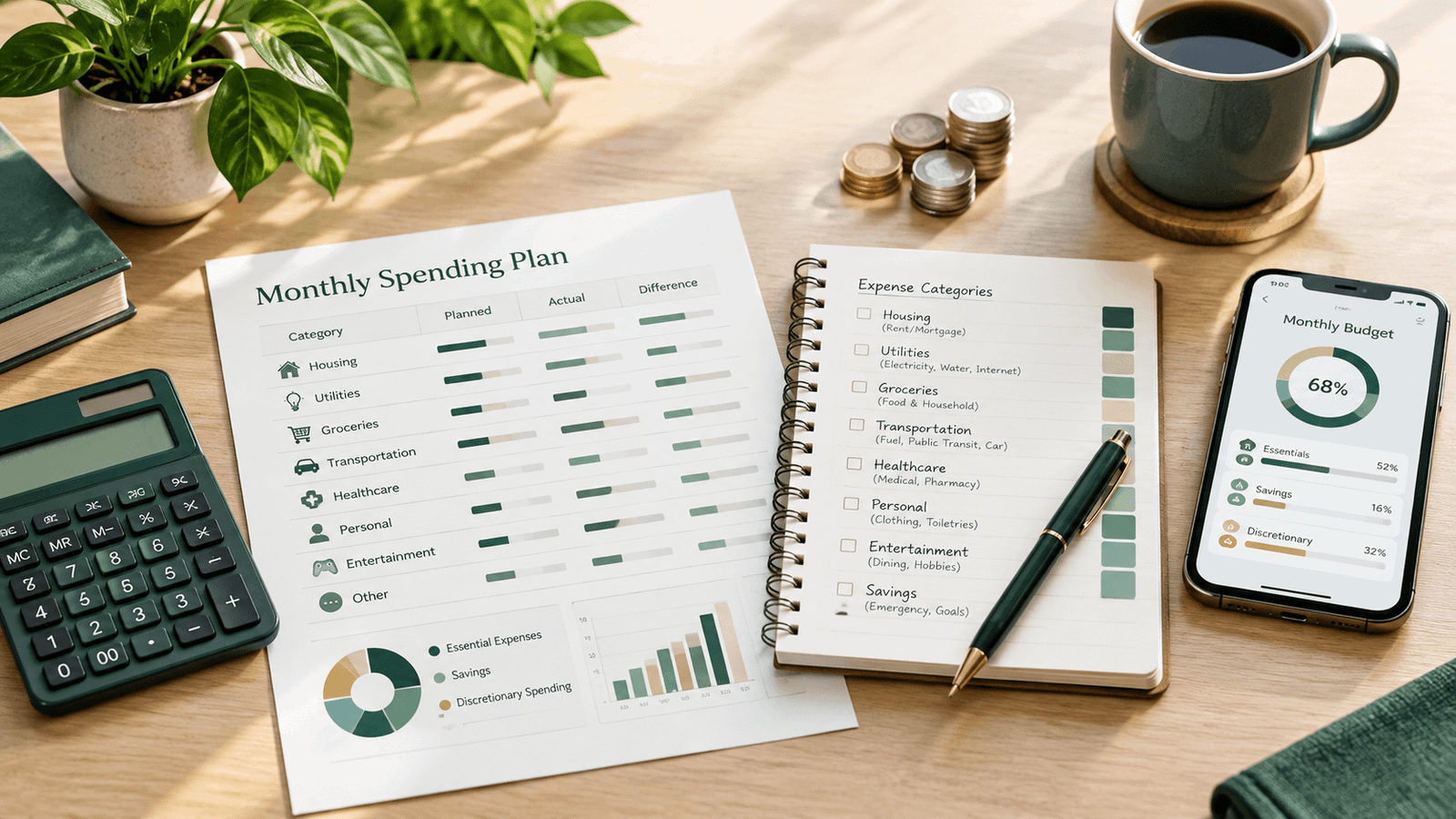
Personal spending plan workspace with calculator, expense planner, and savings notebook

Managing money is not only about earning more or spending less. It is about knowing where your money goes, deciding what matters most, and making sure your everyday spending supports your priorities. Many people try to control their spending by cutting out small purchases or promising themselves they will save whatever remains at the end … Read more