

Introduction
Opening a bank account, applying for a loan, investing through an online platform, or transferring money internationally often requires you to prove who you are. Financial institutions need to confirm that customers are genuine, that their information is accurate, and that their services are not being used for fraud or illegal activities.
Digital identity verification makes these checks possible through electronic documents, databases, biometric technology, and other digital tools. Instead of relying entirely on in-person visits and paper records, a financial provider may verify a customer’s identity through a website or mobile application.
These systems make many financial services more accessible and convenient, but they also introduce important questions about privacy, security, accuracy, and fairness. A verification system that works well for one customer may create difficulties for another who lacks certain documents, has an outdated address, or cannot complete a biometric check.
This guide explains how digital identity verification works, why financial institutions use it, the technologies involved, common challenges, and practical steps consumers can take to protect their personal information.
What Is Digital Identity Verification?
Digital identity verification is the process of using electronic methods to confirm that a person is who they claim to be.
A financial institution may collect information such as a person’s legal name, date of birth, address, government-issued identification, or other details required by local regulations. It then checks that information against approved documents, trusted databases, or other verification methods.
The exact process depends on the country, institution, product, and level of risk involved. Opening a basic account may require different checks from applying for a large loan or accessing a service with higher fraud risks.
Digital identity verification is not the same as simply creating an online account. A username and password may show that someone can access an account, but they do not necessarily prove the person’s real-world identity.
Why Financial Institutions Verify Customers
Preventing identity fraud
Criminals may use stolen personal information, forged documents, or impersonation to open accounts or obtain financial products. Identity checks help institutions detect suspicious applications before providing access to certain services.
No verification system catches every fraudulent attempt. Institutions often combine multiple checks and continue monitoring accounts after onboarding.
Meeting legal and regulatory obligations
Many financial institutions must identify customers and understand certain aspects of their financial activity under applicable anti-money-laundering, counter-terrorist-financing, and customer-identification rules.
The requirements differ by jurisdiction and type of institution. Digital tools can help providers collect and review the required information, but using technology does not remove their legal responsibilities.
Reducing account-opening friction
Traditional identity checks may require paper forms, physical visits, or manual document review. Digital verification can allow customers to complete many steps remotely.
When the process is reliable, customers may be able to open accounts or apply for services without travelling to a branch. However, additional checks may still be required if information cannot be verified automatically.
Supporting safer financial transactions
Identity verification can form part of a broader system designed to reduce account misuse, unauthorized access, and financial crime. It may be combined with transaction monitoring, fraud detection, authentication, and other controls.
Verification establishes or checks identity at a particular point. It does not guarantee that every later transaction is legitimate.
How Digital Identity Verification Works
The process varies, but many financial services follow a series of common stages.
Step 1: Collecting customer information
The customer enters information into an app, website, or digital form. This may include their name, address, date of birth, identification number, or other details required for the service.
The institution should explain what information is needed and provide a secure way to submit it. Customers should avoid sending sensitive documents through unverified email addresses, messaging accounts, or links.
Step 2: Checking identity documents
Some systems ask the customer to photograph or scan an approved identity document. Software may examine the document’s layout, security features, expiration date, and other details.
A document check may identify signs of alteration or inconsistencies, but automated results are not infallible. Poor lighting, damaged documents, or unsupported document types can lead to a failed check even when the applicant is genuine.
Step 3: Comparing information with trusted sources
Where permitted, a provider may compare submitted details with government databases, credit-reference data, official records, or other approved sources.
The availability and legality of these checks vary across countries. A provider should not assume that every database is complete or that every mismatch proves fraud.
Step 4: Confirming the person is present
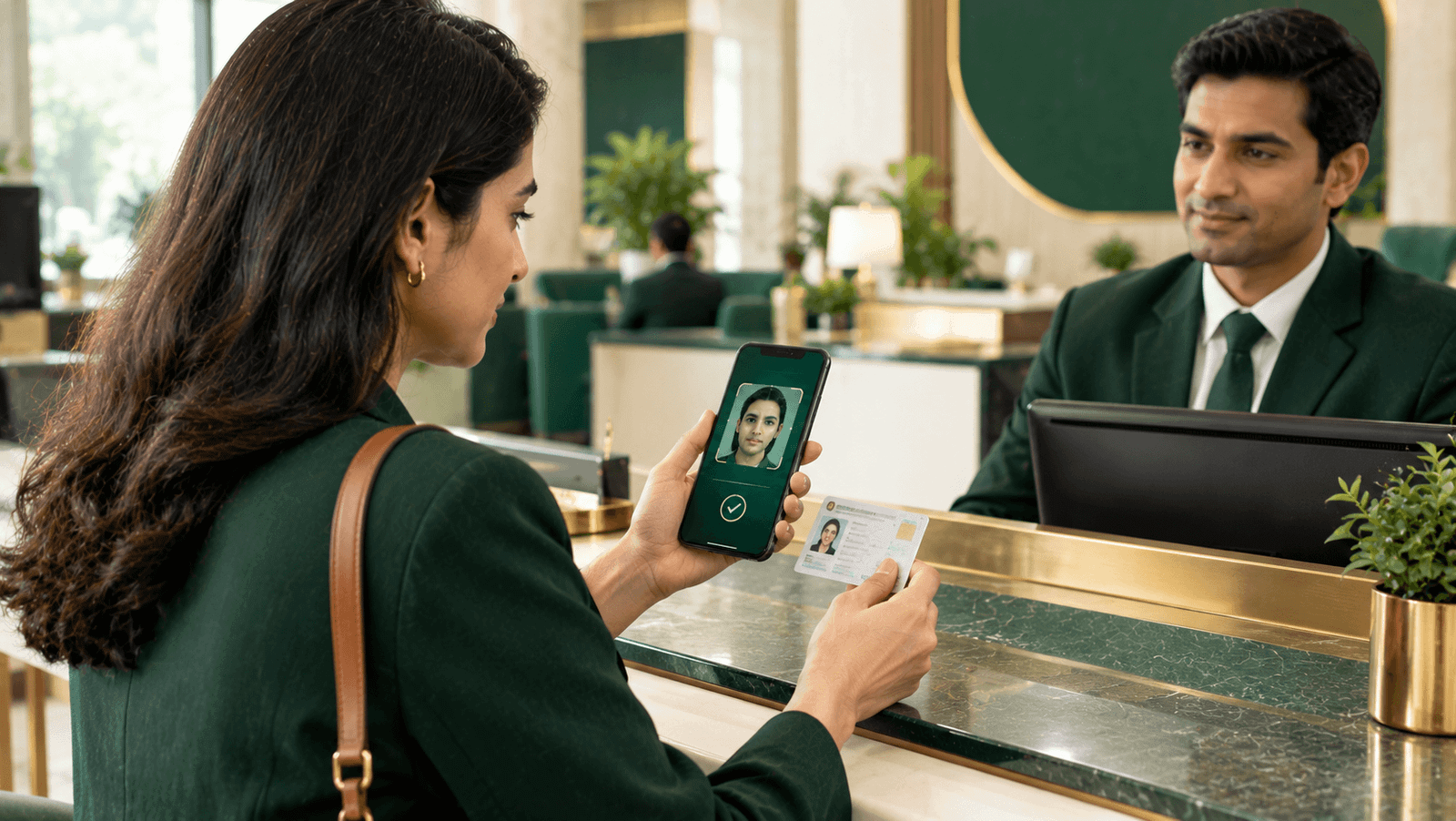
For remote applications, the institution may ask for a selfie, a short video, or another action to help confirm that the applicant is physically present.
Some systems compare a live image with the photograph on an identity document. Others use additional checks to identify possible attempts to use photographs, recordings, masks, or synthetic media.
These technologies can reduce certain types of impersonation, but they can also produce errors and may raise privacy concerns.
Step 5: Reviewing the result
The system may approve the application, request additional information, or refer the case to a human reviewer. The institution may also ask the customer to use another verification method.
A failed automated check should not automatically be treated as proof that someone has committed fraud. A legitimate applicant may need a way to correct inaccurate information or complete an alternative process.
Step 6: Maintaining records and monitoring risk
Financial institutions may need to retain certain verification records under applicable rules. They may also review customer information when circumstances change or when suspicious activity is detected.
The institution should handle these records according to relevant privacy, security, and retention requirements.
Technologies Used in Digital Identity Verification
Optical character recognition
Optical character recognition, commonly called OCR, converts text in a photograph or scanned document into machine-readable information.
For example, OCR may extract a person’s name and document number from an identity card. The institution can then compare those details with the information entered by the applicant.
OCR can reduce manual data entry, but errors may occur when images are blurry, characters look similar, or documents use unfamiliar formats. Important information may still need manual confirmation.
Facial comparison
Facial comparison software estimates whether a face in a submitted image resembles the photograph on an identity document.
This technology can make remote onboarding more convenient, but performance may vary depending on image quality, lighting, device cameras, and other factors. A facial match alone does not necessarily establish that a person is authorized to access a particular account.
Liveness detection
Liveness detection attempts to distinguish a live person from a photograph, video, or other imitation during a remote identity check.
Depending on the system, the customer may be asked to move naturally, follow an on-screen instruction, or complete a short video check. Some systems also examine technical signals to identify suspicious submissions.
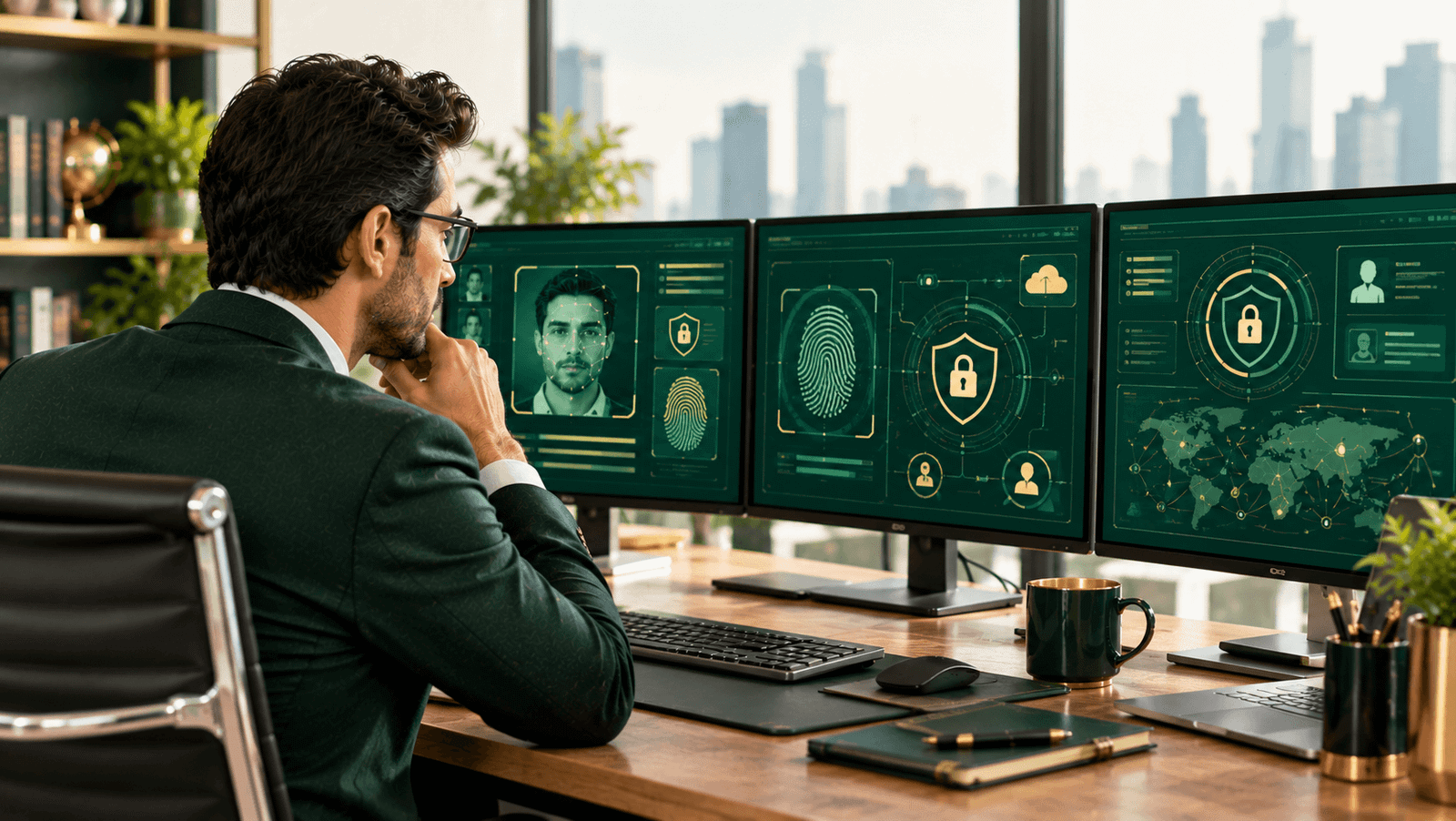
Liveness checks are designed to make impersonation harder, not impossible. Customers should use the institution’s official application or website and avoid completing verification through links they cannot authenticate.
Database and document validation
Some systems compare information with approved records or check whether an identification document appears valid and consistent.
These checks can help identify discrepancies, but databases may contain outdated or incomplete information. Institutions need procedures for resolving legitimate mismatches.
Digital identity credentials
In some systems, a trusted organization issues a digital credential that can be used to prove particular facts about a person. Depending on the design, a credential may confirm information without requiring the customer to repeatedly submit every original document.
The reliability of such a credential depends on who issued it, how it is protected, whether it can be revoked, and whether the receiving institution accepts it.
Artificial intelligence and machine learning
AI systems may help identify unusual application patterns, detect suspicious documents, or prioritize cases for further review.
These systems depend on the quality of their data and design. They can make mistakes, reproduce biases, or flag legitimate customers. Human oversight, testing, clear escalation procedures, and appropriate privacy safeguards remain important.
Digital Identity Verification Around the World
There is no single global identity-verification system. Countries use different identity documents, databases, laws, and digital infrastructure.
India
India’s financial services may use different identity and customer-due-diligence methods depending on the institution and product. Aadhaar-based authentication or offline verification may be available in certain permitted contexts, subject to applicable requirements and safeguards.
Aadhaar should not be treated as the only possible identity document for every financial service. The institution’s current rules determine which methods are accepted.
Customers should verify that a request for identity information comes from a legitimate provider and understand which authentication method is being used.
United States
Financial institutions in the United States may be required to follow customer-identification and anti-money-laundering rules. Depending on the service, they may request a government-issued identification document, taxpayer information, address details, or additional evidence.
There is no universal requirement that every financial institution use the same biometric verification process. Providers select methods that fit their legal obligations, risk assessments, and product requirements.
United Kingdom
Financial institutions in the United Kingdom conduct customer due diligence under applicable financial-crime regulations. Digital document checks, electronic verification, and other methods may be used when appropriate.
The precise evidence required can vary by provider and circumstance. Customers should consult the institution’s official guidance if a digital check fails.
European Union
European countries operate within a broader framework of data-protection and financial regulation, while national systems and accepted identification methods may differ. European digital identity initiatives also aim to make trusted electronic identification more widely usable.
Financial institutions must consider the relevant legal requirements when collecting, processing, and storing identity information.
Other regions
Countries across Asia, Africa, Latin America, and the Middle East are developing different combinations of digital identity infrastructure, mobile financial services, national identity systems, and private-sector verification.
These systems can help people access financial services remotely, but access is not automatic. Internet connectivity, document availability, language, accessibility, and local rules all affect how well a system works for individual customers.
Benefits of Digital Identity Verification
Faster onboarding
Automated document processing and electronic checks can reduce the time required to review applications. Some customers may complete the process within minutes, although more complicated cases can take longer.
Greater access to remote services
People who live far from bank branches may be able to apply for certain services without travelling. This can be particularly useful for people in rural areas or those with limited mobility, provided they have access to suitable devices and connectivity.
Less repetitive paperwork
Where institutions can securely reuse accepted verification results or digital credentials, customers may not need to submit the same documents repeatedly. Whether reuse is allowed depends on the system and applicable rules.
Improved fraud detection
Combining document checks, identity information, and risk signals may help identify suspicious applications. This can protect both customers and institutions, though no system can eliminate fraud entirely.
Better operational efficiency
Digital workflows can help institutions manage large volumes of applications and focus human review on cases that need closer attention. The overall benefit depends on system quality, integration, and the availability of effective support.
Risks and Challenges
Privacy and excessive data collection
Identity verification may involve sensitive information, including government identification numbers, photographs, addresses, and biometric data.
Collecting more information than necessary can increase privacy risks. Institutions should explain why data is required, how it will be used, who may receive it, and how long it may be retained, subject to applicable law.
Customers should be cautious when a provider requests information that appears unrelated to the service.
Data breaches
A company that stores identity documents or biometric information can become a target for cybercriminals. If sensitive records are exposed, affected individuals may face a greater risk of impersonation or fraud.
Financial institutions need appropriate access controls, encryption, security monitoring, staff training, and incident-response procedures. Customers should use strong account security and report suspected exposure promptly.
False rejections
An automated system may reject a legitimate customer because of poor image quality, a name mismatch, an expired document, or incomplete records.
A fair process should explain the problem where possible and provide a way to correct the information or request human review. Customers should not have to assume that an automated decision is final in every circumstance.
Exclusion and accessibility
Some people may lack a modern smartphone, reliable internet access, a supported identity document, or the ability to complete a facial scan. Others may have disabilities or physical characteristics that make certain biometric processes difficult.
Financial providers should consider accessible alternatives and suitable non-digital or assisted verification options where available and legally permitted.
Bias and uneven performance
Automated systems may perform differently across demographic groups, document types, devices, and environmental conditions. Poorly designed systems can create unfair barriers.
Institutions should test systems across relevant populations, monitor error rates, and provide meaningful routes for resolving incorrect results.
Deepfakes and evolving fraud
Advances in synthetic media make it easier for criminals to create convincing images, voices, or videos. Verification systems therefore need to evolve alongside fraud methods.
Customers should remember that a realistic-looking video call or image is not, by itself, proof that a person or financial request is genuine.
Digital Identity Verification vs. Authentication
These two terms are related but serve different purposes.
Identity verification checks whether a person is who they claim to be, often when opening an account or applying for a financial service.
Authentication checks whether someone attempting to access an existing account can provide the required evidence, such as a password, security key, or one-time code.
For example, a bank may verify a new customer’s identity during account opening. Later, the customer may authenticate using a password and an additional security factor.
Neither process is a complete guarantee of safety. An identity can be verified correctly and an account can still be compromised later if credentials are stolen or a customer is tricked into approving a fraudulent action.
How Consumers Can Protect Their Digital Identity
Use official channels
Start verification from the financial institution’s official website or application. If you receive an unexpected message requesting identity documents, contact the provider through a trusted phone number or website rather than relying on the message’s link.
Check the requested information
Understand which documents and details are required. Be wary of requests for passwords, account PINs, or one-time authentication codes that are unrelated to the legitimate verification process.
A real provider may need identity documents, but that does not make every request for personal information genuine.
Protect your devices and email
Use a screen lock, update your operating system, and secure the email account connected to your financial services. Email access can sometimes be used to reset passwords or intercept account notifications.
Avoid installing applications from untrusted sources.
Use strong authentication
Where available, use multifactor authentication or a passkey to protect financial accounts. A unique password is preferable to reusing the same password across many services.
Never share a one-time code with someone who contacts you unexpectedly, even if they claim to be a bank employee.
Be cautious with biometrics
Biometric information can be sensitive because it relates to physical characteristics. Before completing a biometric check, confirm that the request is from the legitimate provider and review available privacy information.
Do not upload identity documents or facial images to unfamiliar websites simply because they promise faster financial approval.
Review account alerts
Pay attention to notifications about new accounts, password resets, identity checks, or transactions you did not initiate. Contact the provider promptly if something appears suspicious.
Report suspected identity theft
If you believe your identity information has been misused, contact the relevant financial institution and follow the official reporting process in your country. Depending on the circumstances, you may also need to contact a government agency, credit-reporting organization, or law-enforcement authority.
Keep copies of relevant communications and case numbers.
What to Do When Digital Verification Fails
A failed check does not necessarily mean that your identity is invalid. Before trying repeatedly, review the provider’s instructions and identify the possible cause.
- Check that your document is accepted and has not expired.
- Retake the image in good lighting, with all edges visible and no glare.
- Confirm that the information entered matches your official documents.
- Check whether the provider requires a current address or another supporting record.
- Contact the institution through its official support channel.
- Ask whether an alternative verification method or human review is available.
Do not alter a document, provide false information, or use someone else’s identity to get through a verification process. If the system contains inaccurate information, request a legitimate correction.
The Future of Digital Identity Verification
Digital identity systems are likely to continue evolving as financial services become more connected and fraud methods become more sophisticated.
Reusable digital credentials may reduce repetitive paperwork. Privacy-enhancing technologies may allow institutions to confirm specific facts without collecting every underlying detail. AI may help identify suspicious activity, while stronger security methods may make remote verification more resistant to impersonation.
However, technical progress alone will not solve every problem. Systems must remain accessible, secure, accurate, and accountable. Consumers also need understandable explanations of how their information is used and a way to challenge errors.
The most effective approach combines technology with sensible regulation, independent testing, human oversight, and clear customer support.
Frequently Asked Questions
Is digital identity verification safe?
It can be safe when a legitimate institution uses appropriate security, data-protection, and verification practices. However, no system is risk-free. Customers should verify the provider and understand what information they are sharing.
Does digital identity verification always require a selfie?
No. Some providers use document checks, electronic database verification, or other approved methods. Whether a selfie or biometric check is required depends on the institution, product, and applicable rules.
Can digital identity verification prevent all financial fraud?
No. It can help detect impersonation and suspicious applications, but fraud can occur after account opening through stolen credentials, social engineering, or other methods. Identity checks are only one part of financial security.
Why might a legitimate application be rejected?
Possible reasons include poor document images, unsupported documents, expired identification, inconsistent personal details, or inaccurate database records. Contact the provider and ask about correction or alternative review options.
Is digital identity verification the same in every country?
No. Countries have different identity systems, legal requirements, accepted documents, and privacy rules. A method accepted in one country may not be accepted in another.
Should I send identity documents over email?
Only if the legitimate provider specifically instructs you to use a verified and appropriately secure channel. When possible, use the provider’s official portal or application and confirm unexpected requests independently.
Conclusion
Digital identity verification helps financial institutions confirm customers remotely, support regulatory compliance, and reduce certain forms of fraud. Document analysis, database checks, biometrics, and digital credentials can make financial services more convenient, but each method has limitations.
Consumers should use official channels, protect their personal information, secure their devices, and seek help when a verification process fails. Financial institutions, meanwhile, need to balance fraud prevention with privacy, accessibility, accuracy, and fair treatment.
Digital verification works best when technology supports trustworthy processes rather than replacing careful judgment.
This article is for educational purposes only and does not constitute legal, financial, or cybersecurity advice. Requirements vary by country and provider. Consult official guidance for your specific circumstances.
Related Guides and Official Resources
Read Finobloom’s guide to open banking and secure financial data sharing for another part of the digital finance ecosystem. For identity-protection steps, consult the US Federal Trade Commission’s IdentityTheft.gov resource and follow your local regulator’s guidance.