

If you are worried that someone could use your personal information to open a credit card or take out a loan in your name, freezing your credit may help protect you. It is a free security measure in the United States that restricts access to your credit report, making it harder for identity thieves to open new credit accounts.
The good news is that you do not need to wait until your identity has been stolen to take action. You can request a credit freeze as a preventive measure, even if you have never experienced fraud.
In this guide, you will learn how to freeze your credit, which credit bureaus to contact, when to lift a freeze, and how a credit freeze differs from a fraud alert.
Important: This guide focuses on the United States, where consumers can freeze their files with Equifax, Experian, and TransUnion. Credit-reporting systems and protections vary by country.
What Is a Credit Freeze?
A credit freeze, also called a security freeze, restricts access to your credit report. Lenders commonly check credit reports when evaluating applications for credit cards, personal loans, auto loans, and other borrowing products.
When a freeze is active, a lender generally cannot access your frozen credit report to approve a new credit account. This can make it harder for someone to use stolen personal information to borrow money in your name.
According to the Federal Trade Commission (FTC), credit freezes are free to place and lift, do not affect your credit score, and remain in place until you ask for them to be lifted or removed.
A credit freeze does not erase your credit history or close your existing accounts. It limits access to your credit file for certain purposes.
Why Should You Freeze Your Credit?
There are several situations in which a credit freeze may be worth considering.
1. Your personal information was exposed
Data breaches can expose sensitive information such as your name, address, Social Security number, or other identifying details. If you learn that your information was compromised, a freeze can help reduce the risk of someone opening new credit accounts using it.
2. You suspect identity theft
Unfamiliar credit inquiries, unexpected account notices, or bills for accounts you never opened may indicate possible identity theft. A credit freeze is one protective step to consider while you investigate.
3. Your wallet or important documents were lost
A lost wallet may expose personal information that someone could misuse. If your identity documents or other sensitive details are missing, consider freezing your credit and contacting the companies associated with any lost payment cards.
4. You want an extra layer of protection
You do not need to be a victim of fraud to freeze your credit. Some people choose to keep their credit frozen most of the time and temporarily lift the freeze whenever they apply for new credit.
A freeze is useful, but it is not a complete identity-theft solution. It does not prevent every kind of fraud, and it does not stop unauthorized charges on existing accounts.
How to Freeze Your Credit Step by Step
To place a credit freeze in the United States, contact all three major nationwide credit bureaus: Equifax, Experian, and TransUnion. A freeze with only one bureau does not automatically freeze your files with the other two.
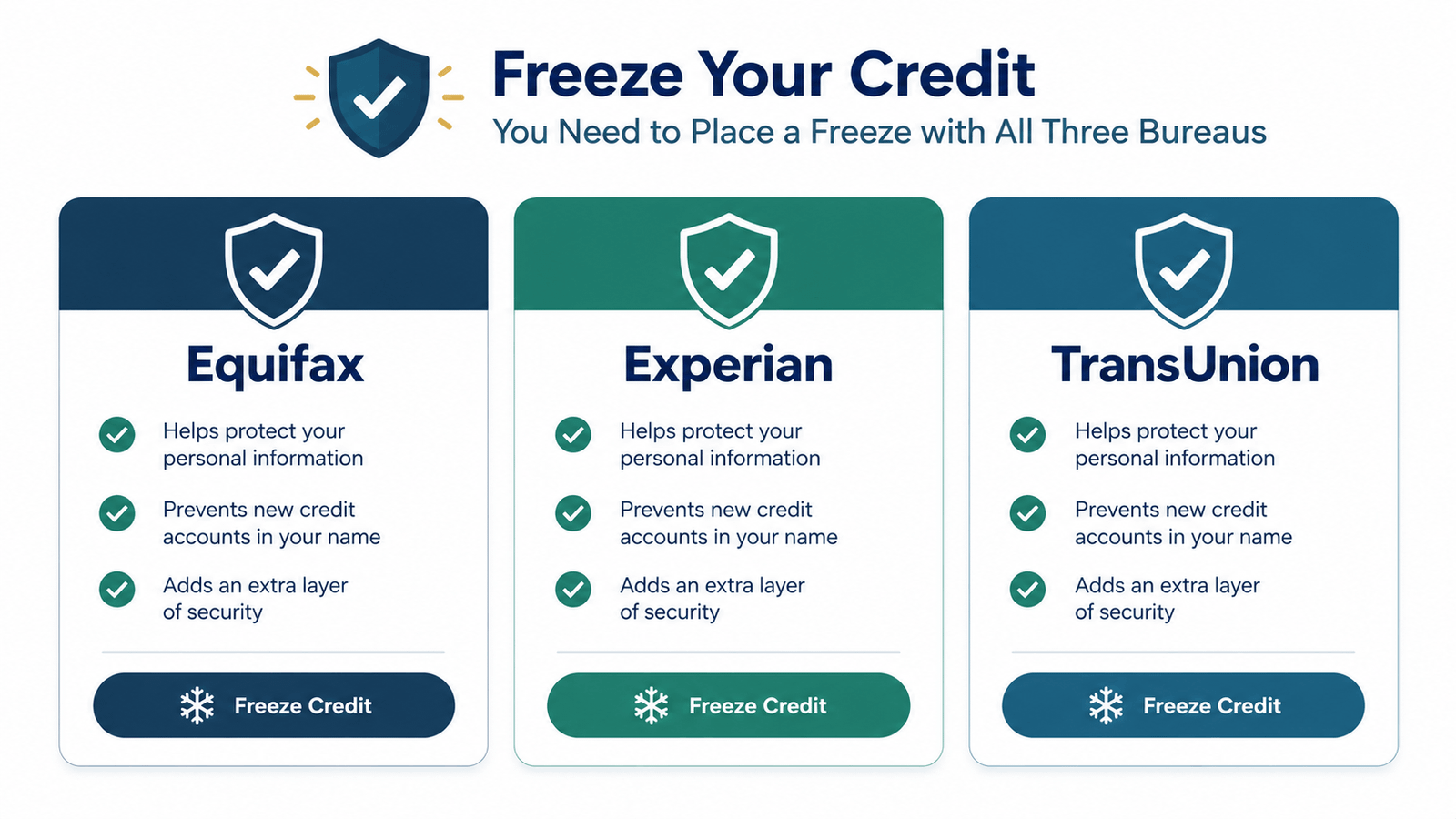
Step 1: Gather your information
Before starting, prepare the personal information each bureau requests to verify your identity. This may include your full legal name, date of birth, current address, previous address, and Social Security number.
The exact verification process can vary. Follow the instructions on each bureau’s official website.
Security tip: Never share your Social Security number, passwords, or verification codes with someone who contacts you unexpectedly. Navigate directly to the official bureau website instead of clicking suspicious messages.
Step 2: Freeze your credit with Equifax
Visit Equifax’s official credit-report services page and follow the instructions for placing a security freeze.
Complete the identity-verification steps and save any confirmation details provided. Make sure you receive confirmation that the freeze has been placed.
Step 3: Freeze your credit with Experian
Visit Experian’s official website and locate its credit-freeze service.
Follow the instructions to request the freeze. Keep the confirmation or reference information in a secure place so you can manage the freeze later.
Step 4: Freeze your credit with TransUnion
Visit TransUnion’s official credit-help page and find the security-freeze option.
Complete the required steps and save the confirmation. You should now have submitted a separate freeze request to each of the three major bureaus.
Step 5: Verify all three freezes
Do not assume that completing the process with one company automatically protects your files at the other two.
Check the status of your freeze with Equifax, Experian, and TransUnion individually. Keep a secure record of the confirmation details and instructions for temporarily lifting each freeze.
The FTC provides official guidance and bureau contact information through its credit freeze and fraud alert resource.
How Much Does a Credit Freeze Cost?
A security freeze at each of the three major US credit bureaus is free to place and lift. You should not need to purchase a credit-monitoring subscription to place a freeze.
Be cautious of websites that imitate official credit bureaus or suggest that you must pay to activate a legally free freeze. Use the bureaus’ official websites and verify the web address before entering personal information.
Credit-monitoring services and credit freezes are different. Monitoring can help alert you to certain changes, while a freeze restricts access to your credit report for certain new-credit decisions.
Does Freezing Your Credit Hurt Your Credit Score?
No. A credit freeze does not lower your credit score or erase your credit history.
Your existing credit accounts remain open, and you can continue making payments as usual. You can also check your credit reports.
However, if you apply for a new credit card, loan, or another product that requires a credit check, the lender may be unable to access your frozen report. You may need to lift the freeze before the application can be processed.
For a broader understanding of credit scores and the information that affects them, read our guide to how credit scores work and how to improve them.
How to Unfreeze Your Credit When You Need It
You do not have to remove a credit freeze permanently just because you want to apply for a loan or credit card.
You can generally request a temporary lift for a specific period or remove the freeze, depending on the options offered by the bureau.
Follow these steps:
- Ask the lender which bureau it will check. This can help you avoid lifting more freezes than necessary.
- Visit the relevant bureau’s official website. Sign in or complete its identity-verification process.
- Request a temporary lift or removal. Follow the bureau’s instructions and check the effective dates.
- Allow time for the change to take effect. Processing times can vary depending on the method used.
- Reinstate the freeze if appropriate. If you requested a temporary lift, verify whether it will automatically end or whether you need to take another step.
If you do not know which bureau the lender will use, contact all three to discuss the best way to make your credit file accessible for the application.
Do not remove a freeze permanently unless that is what you intend. A temporary lift may provide the access you need while keeping your longer-term protection in place.
Credit Freeze vs. Fraud Alert: What’s the Difference?
Credit freezes and fraud alerts both help protect consumers, but they work differently.

| Feature | Credit freeze | Initial fraud alert |
|---|---|---|
| Main purpose | Restricts access to your credit report | Asks lenders to take additional steps to verify your identity |
| Where to request it | Each of the three major bureaus | Usually one major bureau, which must notify the other two |
| Cost | Free | Free |
| Duration | Until you lift or remove it | Generally one year for an initial fraud alert |
| Effect on credit score | No direct effect | No direct effect |
A fraud alert does not block access to your credit report in the same way as a freeze. Instead, it asks businesses to verify your identity before opening new credit in your name.
If you suspect identity theft, you may want to consider both options. The right choice depends on your circumstances.
Read the FTC’s official explanation of credit freezes and fraud alerts before deciding which protection to use.
What a Credit Freeze Does Not Protect You From
Although a credit freeze can help prevent certain types of new-account fraud, it does not protect every part of your financial life.
Existing account fraud
A freeze does not prevent someone from making unauthorized purchases with an existing credit card or withdrawing money from a compromised bank account. Monitor your accounts, enable transaction alerts where available, and report suspicious activity immediately.
Tax or other identity fraud
Someone may misuse your personal information for purposes unrelated to opening new credit. A credit freeze does not automatically prevent every form of tax, employment, benefits, or medical identity theft.
Phishing and social engineering
A freeze cannot stop you from being tricked into revealing passwords, verification codes, or banking information. Be cautious of unexpected calls, emails, and messages that create urgency or demand immediate payment.
Our guide on how to spot AI-powered financial scams explains additional warning signs to watch for.
Fraud involving other reporting systems
Some organizations use specialized reports or databases that are separate from the major credit bureaus. A freeze on your main credit files may not prevent misuse of those records.
For this reason, combine a credit freeze with strong account security, careful monitoring, and prompt reporting of suspicious activity.
What to Do If Someone Has Already Stolen Your Identity
If you discover that someone has opened an account in your name, do not rely on a credit freeze alone.
Take these steps:
- Contact the affected company. Report the fraudulent account or transaction to its fraud department and ask what actions are needed to secure the account.
- Place freezes with all three bureaus. If you have not already done so, request a freeze with Equifax, Experian, and TransUnion.
- Consider a fraud alert. This can ask lenders to take additional steps to verify your identity before extending new credit.
- Review your credit reports. Look for accounts, inquiries, and other information you do not recognize.
- Dispute inaccurate or fraudulent information. Contact the relevant credit bureau and creditor, following their official procedures.
- Report the identity theft. Visit IdentityTheft.gov for the FTC’s recovery guidance and a personalized action plan.
- Secure your other accounts. Change compromised passwords, enable multifactor authentication where available, and contact your bank if financial accounts may be affected.
Keep copies of reports, letters, reference numbers, and communications. Organized records can make it easier to follow up on disputes and track the progress of your recovery.
Frequently Asked Questions
Can anyone freeze their credit?
In the United States, consumers can request a free credit freeze even if they have not experienced identity theft. Visit each major credit bureau’s official website for eligibility and identity-verification requirements.
How long does a credit freeze last?
A credit freeze generally remains in place until you request that it be lifted or removed. It does not automatically expire after a fixed period.
Can I still use my credit card after freezing my credit?
Yes. A freeze generally does not prevent you from using existing credit cards or making payments on existing loans. It primarily restricts access to your credit report for certain new-credit applications.
Can I apply for a loan while my credit is frozen?
You can apply, but the lender may need access to your credit report before making a decision. You may need to arrange a temporary lift with the relevant bureau or bureaus.
Is a credit freeze the same as a credit lock?
No. A credit freeze is a formal security measure governed by applicable law. A credit lock is a separate service offered under a provider’s terms, and its features and protections may differ. Review the terms carefully before paying for any service.
Should I freeze my credit after a data breach?
Consider doing so, particularly if sensitive personal information may have been exposed. Also follow the affected organization’s instructions, monitor your accounts, and report suspicious activity. A freeze can reduce some risks but cannot eliminate every type of identity theft.
Final Thoughts
Freezing your credit is a practical way to reduce the risk of someone opening new credit accounts in your name. In the United States, the process is free, does not hurt your credit score, and can be reversed when you need a lender to access your report.
The most important step is to contact all three major credit bureaus, confirm that each freeze is active, and keep the instructions for lifting it securely stored.
Remember that a credit freeze works best as part of a broader approach to financial security. Protect your passwords, monitor existing accounts, review your credit reports, and act quickly if you notice suspicious activity.
Editorial note: This article provides general educational information, not individualized legal or financial advice. Procedures can change, so verify the latest requirements with the official agencies linked above.