

A pay rise, a better-paying job, or a growing business can make life more comfortable. But when spending rises every time income rises, it can become surprisingly difficult to save. This pattern is known as lifestyle inflation, sometimes called lifestyle creep.
Lifestyle inflation is not simply buying something enjoyable or improving your quality of life. It happens when higher income gradually leads to higher regular expenses, leaving little extra money for savings, investing, or financial goals. The good news is that a few deliberate habits can help you enjoy your progress without letting every extra dollar disappear.
What Is Lifestyle Inflation?
Lifestyle inflation occurs when your spending increases as your income grows. A person might move to a more expensive home, upgrade their phone more often, order takeout more frequently, or add several subscriptions after receiving a raise. Each decision may seem affordable on its own, but together they can absorb the extra income.
For example, imagine your monthly take-home income increases from $2,500 to $3,000. If your regular spending also rises by $500, your income has grown but your ability to save has not. The amounts will differ by country and household, but the principle is the same: what matters is how much of the increase you keep, not just how much more you earn.
Why Lifestyle Inflation Can Be a Problem
- Saving stays stuck: Even with higher earnings, your emergency savings and long-term investments may not grow.
- Fixed costs become harder to manage: A bigger rent payment, car payment, or collection of subscriptions can reduce flexibility if your income falls.
- Financial goals get delayed: Building a safety net, paying down debt, or saving for education may take longer.
- You may feel no better off: New purchases can quickly become normal, so the excitement fades while the bills remain.
Higher spending is not automatically bad. A safer home, reliable transport, better food, childcare, or useful training can be worthwhile. The aim is to choose upgrades intentionally rather than letting every raise create new obligations.
7 Practical Ways to Avoid Lifestyle Inflation
1. Decide where a pay rise will go before it arrives
Before your new income reaches your account, make a simple plan for the increase. You might direct a portion toward savings or debt repayment and reserve some for a meaningful lifestyle improvement. The exact split should fit your circumstances; there is no universal percentage that works for everyone.
For example, if your take-home pay rises by $200 a month, you could decide in advance to put $100 toward a goal and use the remaining $100 for added flexibility or enjoyment. The important part is making the choice deliberately.
2. Pay yourself first
Set up an automatic transfer to a savings account or investment account after payday, where suitable for your goals and risk tolerance. Treat that transfer like a planned expense rather than waiting to see what is left at the end of the month.
If you are still building a basic financial cushion, start by reviewing our guide to an emergency fund. Keep money needed soon or for emergencies in an appropriate, accessible place rather than taking investment risks with it.
3. Keep a budget that reflects your real life
A budget is not meant to eliminate all fun. It helps you see whether your spending matches your priorities. Track major categories such as housing, food, transport, debt payments, savings, and discretionary purchases. Review the numbers monthly and adjust when your circumstances change.
Our guide on building a monthly budget that actually works can help you create a practical starting point. If you do not know where your money is going, begin by tracking transactions for a few weeks instead of trying to change everything at once.
4. Be careful about adding new monthly commitments
One-off purchases are easy to notice, but recurring costs can quietly reshape your budget. Before taking on a more expensive lease, vehicle payment, membership, or subscription, calculate the full ongoing cost, including fees, maintenance, insurance, and renewals where relevant.
Ask yourself: would I still choose this commitment if my income stopped growing for the next year? If the answer is no, consider a less expensive option or wait before deciding.
5. Use a waiting period for non-essential upgrades
When you want a new phone, gadget, wardrobe, or other discretionary item, wait a few days—or longer for a major purchase. Compare alternatives, check whether the item solves a real problem, and make sure it fits the amount you set aside for wants.
This is not about never buying nice things. It is about separating a lasting preference from the excitement of having more money or seeing what other people own.
6. Give irregular expenses their own plan
Annual insurance, repairs, holidays, school costs, and gifts can make a month feel unexpectedly expensive. If you treat these costs as surprises, you may rely on credit or abandon your savings plan. Estimate predictable irregular expenses and set aside a manageable amount regularly.
Learn how sinking funds can help you save for irregular expenses. Planning for these costs makes your everyday budget more realistic and helps prevent a temporary expense from turning into a long-term financial setback.
7. Measure progress by financial security, not appearances
It is easy to compare homes, holidays, clothes, and technology with what friends or social media show. But you cannot see another person’s debts, obligations, or savings from the outside. Choose goals that matter to you, such as having a financial buffer, reducing expensive debt, or gaining more freedom over how you use your time.
If money often runs out before payday, our article on practical ways to stop living paycheck to paycheck offers additional steps to review your cash flow.
A Simple Example: What Happens to a Raise?
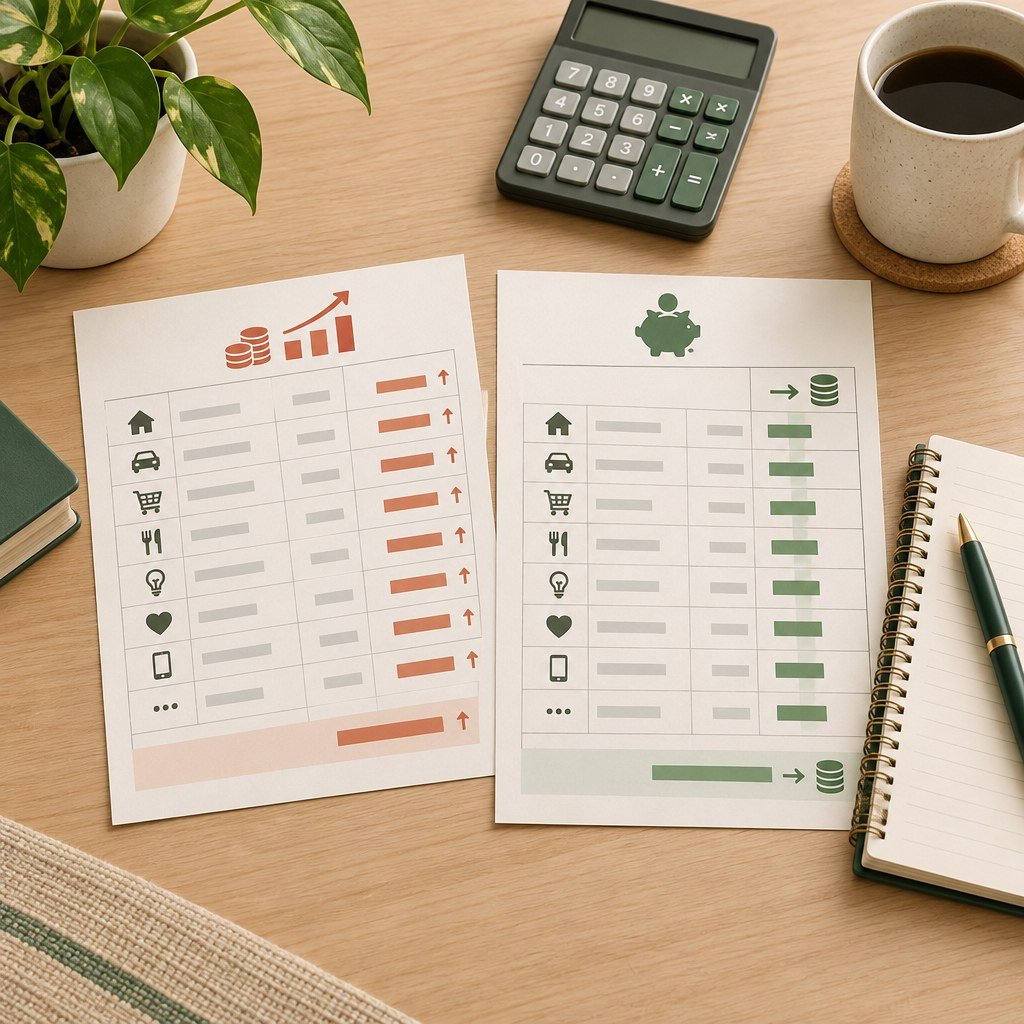
Suppose someone receives an extra $300 per month after tax. If they immediately add $250 in recurring spending, only $50 remains from the increase. If instead they plan to save or repay debt with $150, use $75 for a useful upgrade, and leave $75 flexible, they can improve their lifestyle while still making progress toward financial goals.
This is only an illustration, not a recommended formula. Essential expenses, debt interest rates, local costs, dependants, and income stability all affect what is realistic. The useful lesson is to make a plan for additional income before new habits absorb it.
What If Your Cost of Living Has Already Increased?
You do not need to reverse every upgrade or feel guilty about past spending. Start by reviewing the last two or three months of transactions. Identify recurring costs you no longer value, purchases that can be delayed, and essential costs that have genuinely risen.
Choose one or two changes that are sustainable. You might cancel an unused subscription, switch to a less expensive plan, cook at home a little more often, or redirect a recently paid-off bill toward a goal. If your income is not covering essentials, focus first on cash flow, available support, and contacting creditors early if you are struggling with required payments.
Frequently Asked Questions
Is lifestyle inflation always bad?
No. Spending more on health, safety, family needs, convenience, or meaningful experiences can be reasonable as income grows. The risk is allowing spending to rise so much that saving, debt repayment, and resilience are continually postponed.
How much of a pay rise should I save?
There is no single correct percentage. Review your essential costs, expensive debts, emergency savings, upcoming goals, and income stability, then choose an amount you can sustain. You can increase it gradually as your situation improves.
Can I enjoy my money and still avoid lifestyle creep?
Yes. Include guilt-free spending in your plan after accounting for essentials and priorities. A budget works best when it is realistic enough to follow, not so restrictive that you abandon it.
What is the first step to controlling lifestyle inflation?
Compare your current income with your regular spending and savings. Then decide in advance how you will use the next increase in income. A small, clear plan is easier to maintain than a vague promise to spend less.
Final Thoughts
Lifestyle inflation often happens gradually, but you can manage it with intentional choices. Plan how to use raises, save automatically where appropriate, review recurring commitments, and spend more on what genuinely improves your life—not simply because you can afford it today.
You do not have to freeze your lifestyle to build wealth. The goal is to let your financial security grow alongside your income, so that earning more creates more options in the future.
Disclaimer: This article is for general educational purposes only and is not individualized financial, tax, or investment advice. Personal circumstances, costs, and financial products vary by country.